Roswell Mini K87 Reviews: See Why 0 Shoppers Rated It 0 Stars!
Curious about the Roswell Mini K87 microphone? Before you commit, see what 0 musicians thought about these Roswell Pro Audio microphones — from real-world use to surprise letdowns.
 Supermod
 Moderator
 Recaptor
Roswell Mini K87 Condenser Microphone Review: A Studio Essential with Clean, Crisp Capture
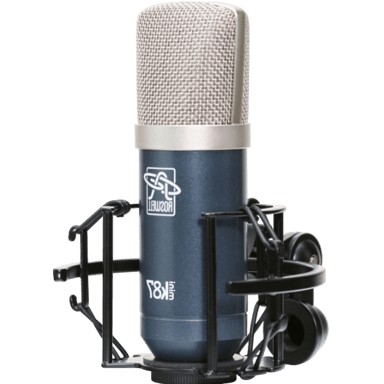
In the crowded world of condenser microphones, the Roswell Mini K87 stakes its claim as a reliable tool tailored for studio professionals and intermediate users alike. Built primarily for voice recording, instruments, and studio applications, this model encapsulates the essentials of a quality microphone type with its true large diaphragm condenser design. With a 2019 release and American origin, it appears engineered to deliver consistent audio capture that meets the expectations of both creative and technical domains.
Detailed Specs & Features
On paper, the Mini K87 brings together a handful of noteworthy specifications that translate directly into performance benefits. Its power source is phantom power, specifically 48V, ensuring compatibility with standard professional audio interfaces and mixers. The XLR connection interface guarantees a stable, balanced analog output with shielding against RF interference, fostering noise-free signal transmission in recording environments. The microphone's capsule is a large diaphragm type, measuring 1.34 inches in diameter and length, which is classically preferred for capturing rich, nuanced sound from vocals and instruments alike.
Regarding its audio performance, the capsule features a frequency response spanning from 50Hz to 15,000Hz. This range effectively covers the majority of audible frequencies relevant to most vocal and instrumental work, offering a natural, slightly warm character without sacrificing clarity in the highs. The signal-to-noise ratio is 87dB, paired with an equivalent noise level of 14dB, pointing to a clean capture with minimal background hiss. With a maximum sound pressure level (SPL) threshold at 135dB, it can handle loud sound sources without distortion, ideal for close mic'ing dynamic instruments or powerful vocals.
A standout point lies in the studio-grade internal preamp enhanced by a transformerless design that contributes to transparency and dynamic range, which peaks at 121dB. This builds a foundation for balanced and detailed recordings, enabling precision in post-production workflows.
Its directionality is strictly cardioid, which helps focus its sensitivity primarily on the front while reducing unwanted room reflections and side noise due to its off-axis rejection rating of 15dB. This focus is beneficial for isolating the source in less-than-ideal acoustic environments. Physically, it sports a compact zinc body with a matte finish, designed with an internal shockmount and removable mounting clip to reduce handling noise and offer flexible desktop or shock mount placement.
User Experience & Performance (Based on Specs)
Design & Build
The Mini K87's design reflects thoughtful engineering. The lightweight form factor at 0.71 lbs and dimensions around 6 inches broad make it unobtrusive in a studio setup. The use of zinc for the body material contributes to its durability while maintaining a matte, neutral aesthetic. Although it lacks water and dust resistance, it compensates with corrosion resistance and a robust internal shockmount to guard against vibrations. The removable mount and swivel/pivot capability enhance placement versatility, which is an important comfort factor during prolonged sessions.
Performance
In daily use, the microphone's response speed and fast transient response ensure that the delicate attack and decay of sounds are faithfully recorded, preserving the nuances of vocals and delicate instruments such as acoustic guitars or pianos. The absence of onboard gain control or a low-cut filter might require external mixing desk adjustments, but the balanced and clean output signal simplifies processing.
The polarity is fixed cardioid, meaning there's no multi-pattern switching, but this aligns well with consistent studio settings where pattern changes are rare. Overall, its audio fidelity specifications suggest a microphone that excels in capturing clear, detailed sound with little coloration.
Connectivity & Interfaces
The inclusion of a detachable cable and phantom power support makes integration into professional rigs straightforward. The standard XLR pin configuration and balanced analog output effectively reduce hum and electromagnetic interference. In contrast, the shielding against RF interference adds another layer of signal clarity, which is crucial in electronically dense studio environments.
Additional Features
Some might miss modern extras such as onboard controls, mute functionality, or LED indicators. However, this simplicity can be advantageous to users who value pure signal chain transparency and minimal points of failure. There's no app or software integration, which positions this microphone as more of a pure hardware choice. While it doesn't provide smart assistant compatibility or AI noise cancellation, this absence underscores its orientation towards traditional recording use, where such features are typically redundant.
Pros & Cons
Pros
- Excellent studio-grade internal preamp for transparent sound.
- Solid build quality with shockmount and corrosion resistance.
- Wide frequency response and high maximum SPL handle diverse sources.
- Balanced XLR output with RF shielding for a clean signal.
Cons
- Lacks onboard controls such as gain adjustment or mute.
- No multi-pattern functionality limits versatility.
- No accessories, such as a stand or cables, are included in the package.
Price & Value for Money
Retailing around $469 at Amazon, the Mini K87 sits comfortably in the mid-range condenser market. Given its 1-year warranty and studio-grade digital-to-analog performance, this pricing aligns well with what users might expect when demanding reliable, professional audio capture without bells and whistles. While it may not appeal to those looking for integrated controls or multi-pattern flexibility, the microphone offers a transparent and robust approach suitable for studios prioritizing clarity and build quality over added features. For home studios or semi-professional environments, it represents a worthwhile investment with measurable engineering quality backing its performance claims.
Quick Take
In short, the Roswell Mini K87 provides a solid classic condenser microphone experience with a focus on clarity, durability, and simplicity. If we look at the numbers alone, the low noise floor, high SPL tolerance, and studio-grade preamp, it's clear that it's designed for users who value clean sound capture and are ready to handle gain adjustments externally. Its straightforward connectivity and reliable build make it a dependable choice for serious audio professionals.
Closing Recommendation
This microphone may be ideal for recording engineers and musicians seeking a reliable, cardioid-pattern condenser microphone without the distraction of onboard controls or digital processing. It appears to perform best for studio voice and instrument tracking where environmental control is in place, and the priority is high-fidelity capture. In real-world terms, its design and specification balance serve users aiming for great sound quality from a practical, no-compromise tool.
Verdict
Rating: Based on the specifications and overall feature set, we believe Roswell Mini K87 deserves 4.3 out of 5.
- Winner Feature => Studio-grade internal preamp and clean transformerless design that elevates sound transparency.
- Needs Improvement => Missing onboard controls and multi-pattern functionality limit its versatility in dynamic environments.
Reviews 0
The good, the bad, and the brutally honest.Average Rating


More Microphones 1229
Unlock more awesome finds.